
A Breakthrough in Post-Surgical Healing
Chitogel is a surgical hydrogel, co-developed at the University of Otago, that reduces post-operative complications and supports faster and cleaner healing after surgery.
Emerging from years of research into the complex needs of wound healing and infection prevention, the innovation lies in its unique gel formulation, combining chitosan with a natural sugar polymer to provide both hemostatic and antimicrobial properties.
The hydrogel is now FDA-approved and used in ENT and sinus surgeries globally, where it has been proven to reduce adhesions, prevent infection, and improves patient recovery times.
Chitogel’s commercial success reflects the mission of University of Otago academics looking to address real-world challenges through scientific excellence. The project emerged from Otago’s strong foundation in polymer and biomedical chemistry, where academic curiosity was matched by a clear vision for patient-centered outcomes. Otago Innovation played a key role in bridging the gap between discovery and delivery, enabling the University’s research to progress beyond the lab into clinical application at a global scale.
With strong evidence from clinical trials and global uptake by surgeons, Chitogel has become a world-leading example of research impact. It is used in New Zealand alongside other key markets including the United States, Australia, and Europe, providing a platform for future innovations in surgical care emerging from Otago’s research ecosystem.
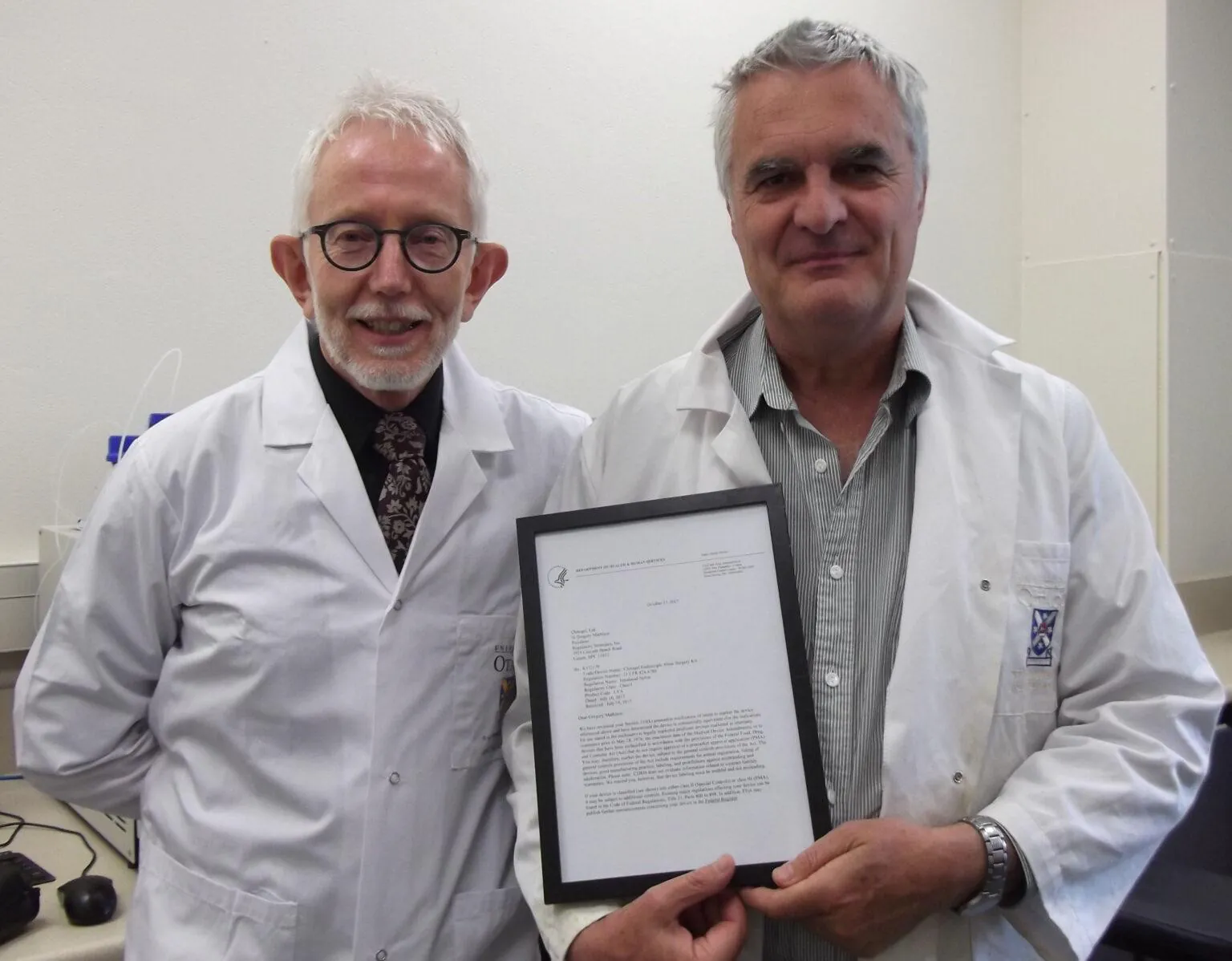


At the heart of this innovation were the University of Otago researchers Professor Lyall Hanton, Dr. Stephen Moratti, Zheng Shi, and Professor James Simpson, whose combined expertise laid the foundation for Chitogel’s development. Their collaborative efforts reflect the interdisciplinary strength of Otago’s research community. The effort was further enhanced by the involvement of global key opinion leader ENT surgeon Professor PJ Wormald from the University of Adelaide and local ENT surgeon Simon Robinson, whose father, the late Professor Brian Robinson, was one of the key drivers of the project.